Friday, September 25, 2009

Jai Maata Ji!

If you had come to India this past weekend, you would have found me on a 100 kilometer pilgrimage. You didn’t, so come take a walk in my shoes. And you just walked the distance of almost two and a half marathons in 48 hours with a total sleep time of 6 hours. You’re kind of exhausted.
Let’s start from the top.
It’s that time of year when pious Hindus make a pilgrimage to the temple of the goddess Ashapura in the village Mata Nu Madh. They take on the strenuous journey to thank and give offerings to Ashapura for fulfilling their wish or to ask that she grants them one. You journeyed with four friends from the office not for religious purposes, but because:
a) You’re not one to turn down once in a lifetime experiences
b) You liked that it coincided with Rosh Hashana, the Jewish New Year
c) You loooove to walk
So you and your friends leave Friday night at 9pm from Bhuj with all the energy and enthusiasm in the world. One of them is fairly certain that you are the first foreigner to do this pilgrimage, but she was also pretty sure that America was part of Europe. Either way, over the next 48 hours you won’t see any non-Indian faces among the 700,000 on this journey.


You walk all Friday night without sleeping, a little drowsy but happy the darkness comes with stars, privacy from curious eyes, and cool temperatures. Along the way, thousands of people are helping you reach the temple … water and snacks are being handed out almost every 30 minutes, camps are set up for sleeping, eating, and sometimes even for wrapping your feet in bandages. A service you will need to avail yourself of come kilometer number fifty. (Why are these people spending their time and money to help? It’s their offering to Ashapura. Or, god points). You rest your legs at some of these camps at midnight, 3am, and 4:45am. When the sun begins to invade the night around 6am, you dread the heat and your bright visibility as a foreigner. But it’s okay.


Around 9am and 30 kilometers (18.6 miles), you take a detour to your friend’s cousin’s house. They are opening their home for you to rest. The five of you pile into a room, and sleep four glorious hours on the floor. At 2pm (it’s Saturday), you groggily wake for lunch. Avoiding the heat of the day, you don’t mobilize to leave until 5pm.
That your legs already ache, that your feet are COVERED in blisters, and that you’re only one third of the way done, feels a bit demoralizing. But it’s nothing compared to how dreadfully drained you feel at the half way point. Which you reach around 10:30pm.
It’s a big camp, and you are so grateful for the doctors (were they doctors?) that take needles to your blisters to drain blood and puss and then wrap your feet in so much bandage that they look like mummies. But you’re not complaining. It could be a lot worse. And each of the tens of thousands of people around you has the same pain. Most are even walking in flip flops or barefoot and have bags balanced on their heads. You don’t know how.

Thanks to the rest and bandages, you’re feeling recharged. The low-point is over. You keep walking until 2:30am when you finally stop to sleep. You’ve been going a fairly good pace because fast or slow, the pain is the same. You’re exhausted and don’t mind sleeping like sardines with 50 other men and women on [a fairly filthy] ground. At 4:00am, you wake up and note the irony that when you looked at your watch you thought, ‘ooo that was a lot of rest.’

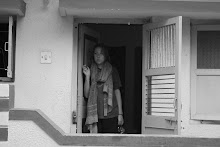
Walkers Sleeping Along the Way

Here you carry on without the group, eager to cover a lot of distance before the sun and the heat ambush you. With your second sunrise, you wonder where the hell you’re going to go to the bathroom. On the side of the road is fine, but you don’t have a friend to keep watch and cover you, and you’re not going to risk having the staring eyes follow you behind the bushes. So you stop drinking water for a bit. Meanwhile, you don’t realize how slow your friends are moving today, and the distance between you and them keeps increasing. But for now, you’re enjoying the solitude and mostly adjusted to the curious stares and commentary.
Foreigner?!
What is your name please?
Jai Maata Ji! (roughly translating to ‘long live the goddess,’ it’s shouted a lot along the way)
At noon, you stop at a big camp for a power nap and for your friends to catch up. An hour and a half later, you are all reunited and feeling pretty good. There’s only fifteen kilometers to go. You wait out some of the heat and start walking again around 3pm. In another five kilometers, you’re going to stop for a bath at a water pipe. It’ll be one of your most interesting shower experiences, topping the time you accidently showered in the men’s bathroom in Sydney. But anyways.
The last 10km are fantastic. You’re all in good spirits, joking around with each other, and laughing at the hobbling that’s taken the place of walking. Because sometimes all you can do with pain is laugh at it. Your friends are making fun of all the people who try to talk to you. And you love them more than ever.
The arrival at Mata Nu Madh around 9pm Sunday night is chaos. 15,000 people have ascended the tiny village and temple that night, and it’s a mad house. The collective spirituality of the journey gave way to an individualistic selfishness of pushing and shoving to reach Ashapura. The experience includes walking your blistered, sore feet barefoot (because no shoes in the temple) through the muddy, filthy village, being herded like cattle, the worst [barefoot] bathroom experience ever, and then standing in line for two hours (after 62 miles of walking) waiting for a bus back to Bhuj.
But you made it. And for whatever reason, the chaotic culmination doesn’t take away from the experience, it only adds to it. Maybe it’s the feeling of accomplishment, maybe it’s the camaraderie, or maybe it’s Ashapura and your earned god points, because you feel gooood.

Thursday, September 3, 2009

Snapshots

I’m sitting at my desk in the KHAMIR Craft Resource Center. The hot wind approaches brazenly through the window, yet again knocking the papers off my table like a jerk. Sweet, steamy, milky chai arrives. It must be 3:30pm. I’m working on the craft-based newsletter we’ve decided to launch for the artisans of the region. A weaver from a nearby village comes in.
Namaste ben.
Namaste bhai. Kem cho?
Mujama.Tuhme?
Mujama.
Pankajbhai, a director, comes over.
Jamieben, can you help fill out this grant application?
Of course. When’s it due?
Yesterday.
***********
In the doorstep of our flat, I sit reading Mind Without Measure by J. Krishnamurti. A philosophical text given to me by an Indian friend happy to expand my western mind. Having finally arrived home from work before 8pm, I’m feeling calmly exhilarated. I look up from the page to watch evening life ensue on my little lane in Nooton Colony. I smile at the materialization of stereotypical images. Vendors are strolling by with their vegetable carts. Women are taking saris off the clotheslines. Boys are playing cricket. A grandmother is sitting on a terrace. Cows are being cows.
I’m unexpectedly struck by how fortunate I feel to have the chance to live here. To have this be my life for one year. How different and temporary it is for me, but how very real it is for my neighbors. The only life they know.
Then I think of how my brother would probably make fun of me for this dramatic train of thought, and I laugh at myself and at twilight for always making me feel reflective.
I hear my name. Pratik and Vishal have rolled up on their bicycles. I put down J.Krishnamurti and smile at my friends.
Come Jamie, let’s go play badminton. Yea?
Do I ever say no?
***********
There is NPR’s This American Life in my ears and Kachchh landscape in my gaze. It’s Sunday, our one day off from work, so I’m on my weekly extended stroll around Bhuj. Hearing America. Seeing India. I have no set path or destination because I’m a sucker for fortuitous finds. I become thirsty in the heat and stop at a juicer’s cart. For forty cents, I watch a guy slice a pineapple, peel a pomegranate, and use a hand cranked metal machine from the 18th century to squeeze delight into a cup. It’s delicious.
I decide to take a right at the crossroad that normally pulls me left. While Ira Glass is telling me a story about Chicago’s classified ads, I suddenly come across a sight that diverts my pliant path.I’ve found a park with a walking trail, something quite rare for Bhuj.
YESSSS!!
On the way home, I stop by my favorite sweet shop. Feeling a bit smugly like a local. The owner hands me a good-lookin samosa fresh out of the oven and won’t let me pay. It’s delicious.
A bahu saru che. Abhar.
[It’s too good. Thank you]
I say it to him, but my mind applies it broadly.
**********


Wednesday, July 15, 2009

It's an Artisan's Life for Me


With the last dusty turn of the desert road with no name, we reach the village of Ajrakhpur. There’s a lot to see.

Okay wait.
I can’t remember it all that well, but do you know the Disney Pirates of the Caribbean ride? How as the ride leisurely takes you along, you witness little scenes of the life of pirates?
So there’s zero resemblance to a pirate’s life in Ajrakhpur.
BUT I’m reminded of the ride because as we slowly drive through and catch a snapshot of all the different ongoing activities, that’s what it feels like. [Now if you will please exit the world of Disney and enter the village of Ajrakhpur.]

To my left, men are knee deep in a concrete water tank pounding, ringing, and rinsing cotton material. Next to them, meters and meters of fabric are being laid out on the dirt ground to bake in the Kachchh desert solar oven. To my right, fabric is being dipped into barrels of dark midnight dye. Dye that’s mixed over the blazing fires being stoked nearby. It’s only a few more meters before we pass the crops of indigo cultivated to make that dye.

The car stops. Outside the home of the artisan we’re here to meet, a man is sitting on the ground carving intricate designs into a block of wood with rudimentary tools. Inside the house, a number of artisans are printing, block by intricately carved block, beautiful patterns onto the textiles that will be rinsed in those concrete tanks, dyed in those barrels, and dried in that sun as many times as the colors and patterns of the design requires. It will eventually become garments sold and worn around India.

To travel a fifty yard stretch of Ajrakhpur is to observe an entire village engaged and dedicated to the craft of creating block printed textiles.

Why am I telling you this?

Because you [theoretically] wanted to know what it is that I do here. And I’m volunteering for an NGO that exists to revitalize, reposition, and promote the traditional crafts of Kachchh so that they remain viable and sustainable livelihoods for the region’s 30,000 artisan families.

Why do crafts matter?

They matter because after agriculture, craft constitutes the largest sector of the Indian economy. Craft is a way of life here. Yet traditional crafts are dying out, and “when a craft dies, it’s not only a business that dies. With it dies an entire history, a legacy, a tradition, a knowledge.”

Why does Ajrakhpur matter?

It matters because it’s at the heart of these villages that the consequences of globalization are felt. Where the confluences of modernity and tradition tug at the fabric of livelihoods.*

How does this hit home?

After witnessing firsthand that for generations an entire village has been dedicated to and dependent on the painstaking production and variable sale of these (beautiful!) textile handicrafts, conscientious consumerism resonates in a deeper way. Even if we have little individual power in the world, we at least have choice. And some money.
And it’s just that our dollar is our vote.
And it’s kinda nice to vote for sustaining the livelihoods of rural communities that really need it instead of the bank accounts of corporations that don’t. Besides, thanks to the regrettably refreshing and stupidly tasty diet coke, some corporations already have my money. So does Disney, but that seems alright.


*There’s a lot to be said on these three things (globalization, modernization, and tradition) and the tensions they create. But that will not happen right here. I’ll just say that - as an example - with the onset of mechanized production of textiles and other crafts, declining local markets, and wage labor to be found in the industrial factories that have popped up thanks to Gujarat’s SEZs (Special Economic Zones), traditional craft occupations are being left behind.


photos taken for KHAMIR by Studio Firefly

Friday, May 22, 2009

Assimilation, or Symbolism in Improbable Places


There are two doors.
Behind one is a Western toilet; behind the other is an Indian squat toilet.

But I’m getting ahead of myself.

To begin with, you should know that I’ve adjusted to a relatively typical life in Bhuj. I spend Monday through Saturday at the office managing both projects and the 115 degree heat; I buy groceries from a store competing in ‘Who Can Cram the Most Items into the Smallest Spaces’*; I go watch Bollywood movies in Hindi, munching on twenty cent masala popcorn. Life here feels part social experiment, part feel-good movie, and part abnormally normal.

Mostly abnormally normal, though.

Because I embrace the idea, ‘Don’t cling to comfort and everything will be comfortable.’ In a less Taoist form, this translates into my current adjustment approach:
a. Don’t assume anything will be like it is at home (because it won’t)
b. Never be in a hurry (because nothing will happen as quickly or efficiently as you’re used to)
c. Form relationships (they are the foundation of everything here)
d. Learn the language (and use it)
e. Say ‘yes’ (unless you really shouldn’t) Bulleted List
Yet, adjustment is only half the battle of living and working abroad. The second part is harder: assimilation.
Which brings me to the doors.
The Choice
They’re located in my office. Every day, I have to choose between the Indian and Western toilet. Despite the fact that this choice may seem easy to you, the overt symbolism of the situation is almost preposterous. It’s a tangible manifestation of the questions I’m continually asking myself: How much of my “Americanness” do I let go of? How much “Indianness” do I take on? These questions arise because when you’re thrown into an entirely different culture, you realize just how much of yourself is a result of growing up in the place, the society that you did. It goes beyond choosing between Indian preferences and American partialities. To assimilate is to question your identity. To determine which aspects of yourself you can shed for the better and which aspects are here to stay (even if they’re not culturally apt). It’s like an identity detox.
But anyways. About those toilets.
The decision is indeed expectedly easy; I just didn’t expect my choice. Still recovering from my ashram toilet aversion (see A Day in Orientation), I was so excited when I discovered the Western toilet here. Yet as it turns out, I haven’t wanted to use the American side since about week three. Which goes to show I need to add a platitude to my adjustment approach:
f. Expect the unexpected
And maybe also:
g. Must you always elevate mundane things into something symbolic of your Indian experience?

* If I fortuitously take my gaze towards the right hand corner of the second shelf from the top on the third aisle of the store in between the bag of lentils and the jar of pineapple jam, I’ll find a luxury item like Oreos.


Tuesday, April 14, 2009

Personification, Sort of


If the city of Bhuj were a woman, she’d be petite and unassuming, but noticeably radiant each evening when the sun saunters towards the horizon, taking the heat with it like a consolation prize. You’d want her to like you, so you’ll assure her that you of course don’t drink or smoke or have boyfriends and definitely don’t eat meat or eggs.* She’ll be reserved and distant the first time you meet her, but she’s friendlier during the second interaction. By the third, you’re so pleased to receive an invitation to her home that you don’t mind when she calls you “Jenny” and your roommate Shulie, “Lucy.”

To get to her home, you will go around the skittles colored temple, wind past the sacred cricket field, and turn left at the sign (uncommonly in English): "Dr. Jignesh. Certified. Physician and Gunecologist.” Her flat will be a snug shade of small with floor cushions for furniture and neighborhood children for entertainment. Beholden to tradition, she does all the cooking and cleaning for her family; aligned with modernization, she also works for a local NGO.  She will speak as much English as you do Gujarati, so despite the education you’ve both received, the conversation will humbly be reduced to baby talk and body language. “Your house. Nice.” Smile exchange. “Food good.  Please, no more.” Motion towards full stomach. When you hear her daughter does “marketing,” you will excitedly begin to tell her that’s what you studied in school. You loooove commonalities.

You will later discover that “marketing” means to go buy things - in the market.
You will be mortified that people think you earned a degree in shopping.

You follow up dinner by experiencing the zenith of Bhuj social life … going out for ice cream. Litchi fruit, mango, fig, black current, saffron, rose – the flavors are so tantalizingly intoxicating and the company of your friends (yes, local Bhujians are your friends), so scrumptious that you don’t miss the giant margarita that you would’ve given an arm, a leg, and definitely at the very least your appendix (because really what use is it anyways?) for an hour ago. Everyone gets a scoop and shares.

For a moment, you detach from the conversation on arranged marriages, admiring Bhuj for her taste in warm people and cool nights. You make a mental note to always appreciate them. To live life to the fullest here. To get out of your comfort zone. To say you studied commerce instead of marketing. A tap on your shoulder brings you back. “What are you thinking about?” a friend gently inquires.
You announce, under the influence of sweet, sweet litchi, “The second round..is on me.”

*Bhuj is in Gujarat and as Gandhi’s home state, it is both a dry state and a vegetarian state.


With Friends at an Ice Cream Stand in Bhuj

Wednesday, March 25, 2009

Open Arms


I sit on my bed. Sweating. Body sore from wretching all afternoon. Our makeshift curtain billows before a subtle, stereotypical breeze brushes my face - bringing with it the characteristic smells of wives cooking dinner with coriander, turmeric, and chili powder. Spices I will be avoiding for a time. Considering the inevitability of illness, I forgive my stomach for its angry and cruel rejections. Besides, it is another example of the two-sidedness that pervades here (and everywhere) – like how the tanner I try to get my skin so that I “blend in”, the blonder my hair becomes - but more to the point, how bad is accompanied by good.     
Since falling ill (the bad part), my phone has been ringing and the door has been knocking with people concerned about me (the good part). Making sure I’m drinking “electric water*” and insisting they can take me to a doctor. In America, the customer may be king, but here in Kachchh, there’s an expression that says, ‘Guest is God.’ The warmth and hospitality I’ve received as a newcomer living in Bhuj makes me feel like I do at the end of watching Rudy. Neighbors insist on feeding us and feeding us, our hunger levels completely irrelevant; friends take us under their wings and on their bikes for errands and escapades into the desert; co-workers include me in the laughs and clue me in on the plans. I’ve had to stop complimenting jewelry because twice, despite my firm resistance, the owners have taken it off and given it to me.
The Salt Deserts - I'm Far Left

So, with a pretty bracelet and ring on my hand, I think about the bad and good of being an outsider - how hard it is to be different, but how nice it is to feel special. And not just because of the jewelry. People so generously take care of us and include us. Although I don’t know exactly why, there are at least a few reasons I can surmise: a. the duty of being a good host is very important b. they want us to love their country (it’s working) c. because perhaps happiness, like everything under the sun here, is something meant to be shared.** From food to joyous occasions to personal space, the attitude is ‘what is mine, is yours.’ As an American, I may be stereotyped and stared at, but the eyes that open towards me are nothing compared to the arms that have opened for me.

* I believe they were referring to electrolyte drinks like Gatorade. Speaking of funny [Foer-like] mis-translations, I saw a sign for gift baskets : “Festive Hampers Available.”
** Generosity permeates the culture. On your birthday, it is customary not to receive gifts, but to give them. At work, any food brought from home is shared with everyone. Yesterday, our friend came over to our house (and all his friends’ houses) with sweets because his brother had a baby. 

Celebrating Holi with my Wonderful Coworkers


Bhuj from a Terrace as the Sun Fades

Friday, February 27, 2009

The Spectacle

My Side of the Room

Caveat #1: I’m finding that, as an American outsider, little is simple in India. So to write about life here is anything but easy. However, I will try to convey a small bit of what my first couple of weeks in Bhuj have been like.

Caveat #2: Talking about life in Bhuj is not the same thing as talking about life in India. Bhuj is its own unique place in the massive, complex country that is India. If you’re looking at a map of Texas, Bhuj is geographically the El Paso of India. It is tucked away in the deserts of the far western state of Gujarat. And Bhuj is as different from Mumbai or New Delhi as El Paso is from Houston or Austin.

                     
Our Street
Nestled cozily on a dirt road between colorful flats and wandering cows, Shulie (another Fellow) and I share a minimalistic room, kitchen, and bathroom in an area called Nootan Colony. The quaintness, however, is simply a facade for the circus of noise that happens every morning outside our door. Shrieking children, shouting mothers, barking dogs, revving motorcycles, clanking pots, and yelling milk men are just a few of the Nootan Colony Circus attractions. The greatest spectacle, however, has just arrived … Shulie and I are now very evidently the main attraction. We can tell by all the gazing eyes, gaping mouths, and giggling children. We are just so…white.

From our flat, I can walk almost anywhere I need to (although invariably I will be the only woman walking by herself on the roads): shops, markets, fruit stands, tailors, and some restaurants - of which our choices are Indian, North Indian, or Indian food. Compared to home, everything is inexpensive. To eat Gujarati Thali (famous local cuisine) at the nicest and fanciest restaurant in Bhuj costs 100 to 150 Rupees, or about $2 to $3.

Our Neighbor Waits Outside Our Door
I live in a corner of the world that has escaped the grasp of McDonalds and Starbucks. Off of the major tourist routes, there are few westerners in Bhuj. It’s part of the reason that Shulie and I get so much attention. I don’t particularly enjoy being stared at, but I find satisfaction in knowing that I’m not just a tourist – that I’m rooted here for almost a year. And soon enough I will be a familiar face in the Bhuj community. Already the gregarious man that sells us vegetables from his stand (who we like because he doesn’t rip us off) knows us and chuckles at my Gujarati, the local language. I’m trying to pick it up as quickly as I can because a little goes a long way on the lengthy road of cross-cultural communication. And until I can get the pronunciation down, I’m quite comfortable with people laughing at my expense. At least there’s laughing.

Overall, each day here at the circus has been an intense roller coaster of highs and lows, but the ride usually leaves me smiling. Because despite the staring, people have been incredibly warm, welcoming, and generous. And when it comes down to it, it’s exciting albeit exhausting, often hilarious, and at least educational to live in a place that’s so different from home.

Thursday, February 19, 2009

A Day in Orientation

In Ahmedabad, India, nine World Partners Fellows spent a month-long orientation living in the Kocharb Ashram - a place where Gandhi once lived. It still operates according to Gandhi’s principles, and it is an oasis of calm in an otherwise chaotic, chaotic city. We are the first group of foreigners the Ashram has ever hosted. It is nearly impossible to sum up this intense, wonderful experience concisely. So below is an example of a day in the life…
WPF '09a in Kocharb Ashram

8:10am One of the girls I’m sharing a small room comprised of four cots, one window, one fan, and one light bulb shuffles out of bed. I ignore the wake up signs and keep sleeping.

8:45am I’ve now piled out of my cot, rolled up my sleep sack and mosquito net, and washed my face and teeth with some bucket water. I have to pee, but I can’t muster the motivation to walk to the outhouse and squat over a toilet hole.

8:50am Everyone is standing (because there are no chairs) around a table munching on a breakfast of bananas, stale white bread, and processed cheese.

9:05am We are now in Gandhi’s library for our first orientation session of the day. Sitting in hard wood chairs around a table, there is a portrait of Gandhi looking over us and his collection of books encircling us. I should have peed.

9:45am Sunita, the program officer (a.k.a. our Indian Mother), is giving us an overview of the Indian political system and national NGOs. We are wearing the Salwaar Kameez that Sunita helped us bargain for in the market.

10:30am We break for chai, sunshine, and stretching.

11:00am It’s our third session of the day and we are sitting on the floor discussing globalization and rights-based international development in small groups. Dave says, “Life is a struggle to resist complacency.”

12:30pm We are sitting outside, cross-legged on the grass eating lunch in a circle as we always do. With our hands as utensils, we eat white rice, daal, chapatti and a vegetable dish that is so spicy, mushy, and oily it surely can no longer be classified as a vegetable. It’s tasty.

1:30pm Another session has begun and we have an outside speaker talking to us about the (still in existence) caste system in India. He is the founder of an Indian NGO dedicated to Dalit rights, and he is incredibly inspiring.

3:30pm Sunita gives us a lesson on cultural dos and don’ts, and Lani, our program director, goes over ethical and responsible volunteering.

4:30pm Sessions are over, and we venture outside the Ashram gates into the pandemonium that is Ahmedabad to do some shopping. Dodging all paces of life in the forms of auto rickshaws, motorcycles, rickety buses, bikes, carts, cars, cows, camels, stray dogs, poop, trash, and the lone elephant, we cross a street which seems to have no traffic rules or regulations.

4:34pm We are still alive and can’t help but notice that every single person is staring at us. The staring continues incessantly and unabashedly everywhere we go. It becomes clear that our whiteness makes us very, very different. We smile.

5:45pm Every challenging aspect of accomplishing an errand is a reminder that India is quite different from home.

6:00pm Our friendly auto rickshaw driver talks to us, or at least the male in the group. After finding out we’re Americans he excitedly shouts, “Obama!” We excitedly respond, “Obama!”
6:02pm I smile remembering that everywhere and anywhere, people are people. And we at least have that in common.

6:30pm Back inside the gates, we recuperate from the venture by lying on the grass soaking in the calmness of the Ashram, looking up into the empty, blue sky, and doing a few yoga poses. I contemplate how it makes total sense that yoga was invented here – with all the chaos going on outside, one must find an internal calm.

6:35pm Oops. Our Indian mother has politely told us that in India women do not just lie on the grass or do exercise out in public and if they do they drape their scarves over themselves for modesty.

6:38pm I lament the cultural differences and all the “rules” for women.

6:40pm I adapt, get over it, and move inside to Gandhi’s study for yoga poses. We are pretty sure he’d approve.
The "Shower"

7:00pm I take a shower with a bucket of water, a pitcher, and a drain. (see above)

7:30 pm Dinner mimics lunch. As always, we wash our own plates.

9:00pm While our group sits and chats, I notice the young Indian men who are the groundskeepers of the Ashram playing a simple game with a whiffle ball. Although they keep their distance from us and I’m pretty sure I’m crossing some cultural boundary that I don’t really understand, I work up the nerve to ask if I can join. They look a bit taken aback.

9:25pm With a smile on my face and sweat on my brow, I am thrilled that games allow for cross-cultural interaction, especially when there’s a language barrier. All those hours I played paddle ball are coming in very handy.

11:00pm Despite the fact that we all spent most of the day talking and discussing and listening, the nine of us are piled in one room swapping stories. I’m loving the other fellows.

12:30am With the light of my head lamp, I attempt to write down all the lessons, experiences, and emotions covered in just one day here. I close my eyes, smile, and brace myself to do it again tomorrow.

Saturday, January 17, 2009

The International Terminal

I’m 24.
I’m at the airport.
And I’m moving to India.
I’m waiting to board a flight to (literally) the other side of the world, and the weight of this decision, while two years in the works, is finally settling in. My head is in a million places - scattered like those little hand held puzzles where you try to get the ball in the hole but it goes around and forward and backwards and sideways stubbornly resisting settling in one place. I can’t seem to pick one emotion and hold onto it.
At the airport in the international terminal there are so many languages being spoken, so many differences to observe. It reminds me how big the world is. It’s easy to forget, especially when the world, as it sometimes does, revolves around you. It’s one of the wonderful things about travelling. One of many. You are part of something bigger than yourself. Bigger than your concerns or worries or joys or problems. Our lives are important, incredibly so, of course. But so are the lives of others – our families, friends, neighbors, and those strangers on the other side of the world. College graduates are forced to decide what it is we want to do with our lives. And the answer is so much bigger than the job - that’s just one facet. It’s about how we lead our lives. It’s about what we choose as important – what values, what choices, what guidelines, what relationships matter. The answers are personal. I believe I know what matters and what’s important to me. It’s constantly evolving, but whatever it is, it’s lead me to here. Right now. Witnessing my own microcosm of multiculturalism in the international airport terminal. Moving to India.
Through the American Jewish World Service (AJWS), I’ve received the World Partners Fellowship. AJWS is dedicated to alleviating poverty, hunger, and disease among people of the developing world regardless of race, religion, or nationality. The fellowship places me with a local, grassroots, Indian non-governmental organization (NGO) for one year. I will be working for an NGO that helps empower artisans to create sustainable livelihoods off of their traditional craft work. It is located in a small town named Bhuj in the desert of Western India. Bhuj will be my home for a year.
It’s difficult to answer exactly why I’m doing this, and the reasons are many and involved. But as I get served pretzels and wine on the airplane, I think about how luxurious my life is. I have everything I could possible need and a thousand times more. I’m not trying to run away from it, but I am attempting to remove myself so that I can better understand the world and the problems that need to be solved. I want to understand through experiences; statistics can only convey so much. I know that ultimately it will be me who gets the most out of this volunteer work, but hopefully along the way I can do some good for others.

* Postscript 7/29/09
I think my brother put it best when he said in response to this post, "Don't you think you're being a little dramatic, Jamie?" He's right. And even though I'm a tad embarassed, it remains since it's pretty much exactly what I was thinking and feeling at the time. Historical accuracy trumps chagrin.